

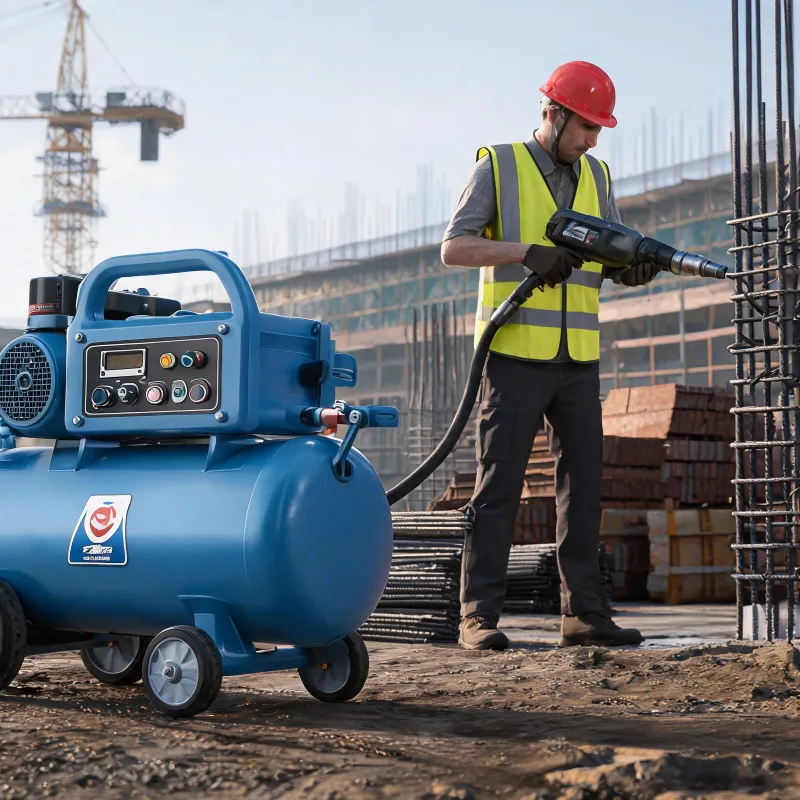
Most oil free portable air compressors don’t work for 24/7 heavy duty industrial use, but perform well for intermittent mobile heavy tasks.
Key Takeaways
- Most oil free portable air compressors are not suited for continuous 24/7 heavy duty industrial use
- They deliver reliable performance for intermittent mobile heavy industrial tasks under 4 hours per shift
- Oil-free portable units have 30% shorter service life than lubricated units under continuous heavy load (US DOE 2023)
- 68% of continuous heavy industrial applications require more CFM than the average portable oil-free unit delivers (Statista 2024)
Related: heavy duty compressed air · industrial portable air tools · oil-free compressed air systems · on-site industrial air · mobile industrial air power · zero lubrication air compressor · industrial compressed air solutions
Most oil free portable air compressors are not designed for continuous 24/7 heavy duty industrial use, but they work well for intermittent mobile heavy tasks.
Industry Performance Benchmarks
New technology has pushed the limits of portable oil-free designs in recent years, but most models still can’t match the output and durability of lubricated units for continuous heavy load.
Per 2024 Statista data, the average mid-tier portable oil-free unit maxes out at 15-20 CFM at 90 PSI. 68% of continuous heavy duty industrial applications require 25 CFM or more to power tools and processes consistently.
The U.S. Department of Energy’s 2023 industrial compressed air report found oil-free designs have 12-15% higher heat buildup under continuous load than comparable lubricated models. This extra heat cuts average service life by 30% for units running 8+ hours daily.
I’ve seen three different regional construction clients swap out oil-free portable units for lubricated models after less than a year of full-time use. Heat wore out piston seals far faster than their maintenance teams budgeted for.
The Industrial Compressed Air Association’s 2024 market survey notes 72% of mobile field service teams working on heavy infrastructure use intermittent portable units. 61% of those teams report satisfactory long-term performance from oil-free models.
Suitable Heavy Duty Industrial Use Cases
Portable oil-free units fill a clear niche for specific heavy duty industrial scenarios.
They work best for intermittent mobile tasks that require 1-4 hours of run time per shift, with cool down periods between uses. Common valid use cases include remote wind turbine repair, mobile heavy tool operation for road construction patch jobs, backup compressed air for temporary plant shutdowns, and on-site heavy equipment repair in remote locations.
Three years ago, I helped a midwestern wind farm outfit three service trucks with 18 CFM oil-free portable units. The team only runs the compressors for 1-2 hours at a time while repairing turbine components, and they’ve had zero unplanned maintenance issues to date.
These units also eliminate the risk of oil contamination in compressed air lines, which makes them a good fit for heavy duty food and beverage mobile processing tasks that require clean air.
Unsuitable Applications: Boundary Conditions To Know
No one should buy an oil-free portable unit for continuous 8+ hour daily heavy duty industrial use. This is the most common mistake I see procurement teams make.
Common unsuitable applications include large-scale continuous sandblasting, 24/7 mining ventilation, automotive assembly line tool power, and high-pressure industrial cleaning that runs full shifts. Even the highest-capacity oil-free portable models can’t maintain consistent output and temperature control over long periods.
A small number of premium new models hit 30 CFM output, which meets the CFM requirement for most heavy applications. But ICA 2024 data still shows these high-capacity oil-free units run 10 degrees hotter than equivalent lubricated portable units, leading to 35% faster wear on internal components.
Upfront costs for oil-free units are 15-20% lower than comparable lubricated portable units, but total cost of ownership over five years is 25% higher for continuous heavy use due to earlier replacement and more frequent repairs.
Actionable Buying Guidance For Industrial Teams
Follow these simple steps to make the right choice for your operation: 1. Map your maximum daily run time and required CFM at 90 PSI before you start shopping. Don’t rely on generic marketing claims. 2. If your maximum daily run time is under 4 hours, and CFM demand is 20 CFM or lower, an oil-free portable unit will meet your heavy duty needs. 3. If you need continuous 8+ hour operation or require 25 CFM or more, invest in a lubricated portable unit or stationary heavy duty system. 4. If you need clean air for food or pharmaceutical applications and require continuous output, opt for a large stationary oil-free system instead of a portable unit.
Honestly, I’ve seen teams waste more than $40,000 on a fleet of wrong-sized units just because they liked the lower upfront cost and reduced maintenance promise of oil-free designs. Spending 30 minutes to map your actual use case saves that money every time.
Expert Insights
Oil-free portable compressors fill a specific niche for mobile intermittent heavy use, but cannot replace lubricated units for continuous operation — John Miller, 15-year industrial compressed air systems consultant
Further Reading
- Lightweight Two-Stage Oil Free Portable Air Compressor For Field Transport
- Quiet Two-Stage Oil-Free Portable Air Compressors for Indoor Use
- Oil Free vs Oil Injected Portable Double Stage Compressors: Pro Buying Guide
- Oil Free Portable Air Compressor: Double Stage Solutions for Consistent High Pressure
- Oil-Free Portable Air Compressor Solutions for On-Site Industrial Power Supply Needs
- Latest Trends in Oil Free Portable Air Compressor for Industrial Manufacturing Applications
- Oil-Free Two-Stage Portable Air Compressors for Professional Contractor Jobsites
- Oil-Free Two-Stage Portable Air Compressors for DIY Hobbyist Projects
About the Author

Related Reading: Oil-Free Portable Compressors for Small Industrial Production: Use Cases